Hotels Embrace Green Certifications as Global Firms Seek Emission Accountability
The demand for sustainability in the MICE industry is growing as hospitality leaders convene at TDM Global Summit Bangkok 2026.
Sustainability is no longer an ancillary topic in the meetings sector; it’s a decisive factor in achieving competitiveness, profitability, and appeal of destinations.
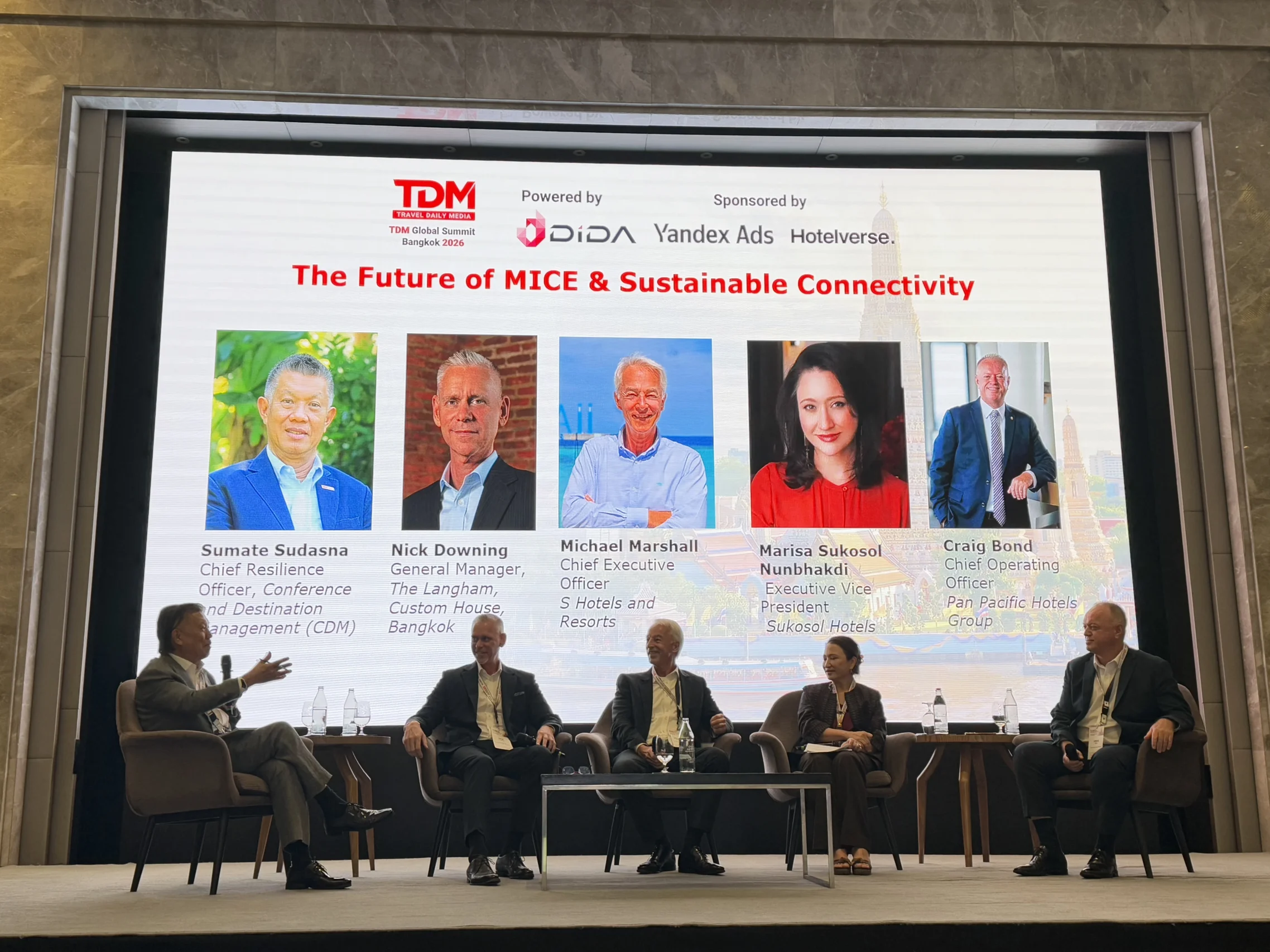
This sentiment was strongly conveyed during a key panel discussion titled “The Future of MICE & Sustainable Connectivity” at the TDM Global Summit Bangkok 2026, where industry leaders discussed how environmental responsibility is evolving from a mere operational requirement to a strategic advantage in business events.
Moderated by Sumate Sudasna, President Emeritus of the Thailand Incentive and Convention Association and Chief Resilience Officer at Conference and Destination Management, the panel included figures from top hotels such as Nick Downing, Michael Marshall, Marisa Sukosol Nunbhakdi, and Craig Bond.
The consensus was clear: sustainability is shifting from an obligation to an opportunity such that compliance now equates to commercial profitability. The growing trend sees multinational companies increasingly gravitating towards green-certified venues due to the rising need for partners adept at emissions reporting, carbon offsetting, and broader ESG obligations.
Notably, sustainability credentials are becoming pivotal procurement criteria, emphasized by Marisa Sukosol Nunbhakdi’s observation that they now represent a competitive edge in the hospitality market.
As hotels explore sustainable practices, there’s a notable evolution from viewing sustainability as merely a cost to recognizing it as a revenue-generating element. Various panellists communicated nuanced insights on how sustainability plays into profitability, with actionable initiatives showing measurable returns while positively impacting the environment.
Moreover, the conversation highlighted how sustainable practices are increasingly transforming guest experiences rather than being confined to operational functions.
In terms of expectations, the panel cautioned against greenwashing, reinforcing the importance of authenticity and rigorous standards in communicating sustainability to guests.
In framing Thailand’s potential as a sustainable MICE destination, participants underscored the existence of rich natural resources and hospitality expertise while suggesting that clearer national standards will further boost competitive positioning.
Ultimately, the panel revealed a compelling vision: the MICE industry’s future is not merely about minimizing harmful impacts but creating an inspiring, positive influence on the destinations it engages with. Sustainability must become integrated into the core product offerings, underlining the industry’s responsibility not only to connect people but to do so sustainably.